Showing posts with label publishing. Show all posts

State of publishing, 2021

It was January 2018. I'd been sitting on the idea for Tendrils to the Moon for a year. The divided reactions to The Last Jedi sent up a mushroom cloud of a signal that a large and growing market wasn't being served by mainstream entertainment. And I was in the middle of reading David V Stewart's Needle Ash series, which proved to this neophyte there was quality writing coming out of self-publishing. The dam penning up my creativity burst, and I blasted out my debut novel in 5 months.

Back then, it felt like self-publishing vs. tradpub was an open question on which reasonable minds could differ. My lack of success in getting an agent in the aughts and my eagerness to get my writing in people's hands all but guaranteed I would self-publish. For a while part of me kept an open mind about going the tradpub route in the future. My mind is closed now. All the evidence I've seen since I started writing again has pushed me closer to regarding self-publishing as the default.

Including this account I saw on Twitter:


After tradpub lost its monopoly on the printing press at the turn of the century, its raison d'être has been quality control. Self-publishing is full of snake oil salesmen and greasy-haired televangelists, so it goes. Best to leave it to professionals to filter out the trash so readers won't be swindled out of their money. This would be fine if it was true.

If you know where and how to look, self-published books are on par with traditionally published books in terms of production value. As for giving readers what they want, self-published books have a clear edge. There are few impediments in the flow of information between a self-published writer and his audience. His success depends on satisfying one person: the customer. He doesn't have to please a dozen Manhattanites with niche sensibilities first.

The tradpub environment was stifling enough before last year. I would characterize what the industry is going through now, evidenced above, as a moral panic. There are two ways to react to panic: mobilize resources to meet the threat, or do nothing. Tradpub mobilized. Agents and editors poured resources into a dubious cause when they should have been focusing on putting good books in readers' hands.

I don't see it getting better anytime soon. Changes in acquisitions processes tend to reflect in new books hitting the shelves at least 12 to 18 months later, so the damage won't be fully felt until 2022.

Two fantasy books that I'm currently neck-deep in on Kindle Vella are Stewart's The Bright Children and TJ Marquis's Children of Asha. Both feature young female protagonists. Not to put too fine a point on it, the authors are neither young nor female. Nor do the settings resemble anything anyone has experienced in the real world. And I couldn't care less because that's the point of fantasy. Imagination is your only qualification. I recommend these books for your entertainment and the enrichment of your life.

If sci-fi is your preferred flavor, check out Seeds of Calamity and Tendrils to the Moon. You can find extended previews for each here and here. As always, let me know what you think in the comments. I'll get back to you as soon as I'm able.

Addicted to success


The creators of many successful IPs are surprised by their success. Their product, borne from a labor of love, appeals to more people than they thought possible. Sales boom. The creators, whose production team started small, scale up operations to meet demand, and launch sequels, spin-offs, crossover products, etc.

Eventually they reach their commercial ceiling, or they release back-to-back mediocre products. A regression to the mean occurs. The creators face having to scale back down to align with this more realistic demand (i.e., lay people off). Or, they reason, they can fudge the essence of the IP to "broaden the appeal."

Essential to any IP's identity is what it excludes. "Broadening the appeal" is to remove what is distinct and special. John Anderson is more right than he knows. Whatever you like about an over-the-hill IP, subsequent iterations that "broaden the appeal" will, at best, still have that content, but bury it under a bunch of crap. The watered-down product may boost sales, but it doesn't cohere like it used to. The original consumer base splinters and the hardcore enthusiasts check out.

This is how most IPs enter what David V Stewart calls the corporate IP death cycle. Their most creative and productive days behind them, the creators or license holders become more concerned with sustaining the largesse they built up to maximize profits. There's little of the creator left in them, for they've become addicted to success.

If you've been following E3, as Bradford C Walker and T J Marquis have, you may be struck by the lack of diverse offerings from the gaming industry. That's because most creators with a big enough presence to present at E3 are well past the initial expansion supported by a singular, well-executed idea. They have organizations to run, and organizations tend to stifle creativity.

"Where's the next [x]?" is a common refrain you hear in dissident circles yearning for quality entertainment that isn't in its fifth or sixth title. The answer is it's being lovingly crafted by someone you've never heard of in their parents' basement. That's the nature of surprises. You don't see them coming.

As always, let me know what you think in the comments. If you like science fiction, check out my books Seeds of Calamity and Tendrils to the Moon. You can find extended previews for each here and here.

Authors, moral purity, and freedom of association

I never met someone who read a Philip Roth novel, let alone liked one. But I've never been to cocktail party on the Upper East Side of Manhattan, either. Roth wrote neurotic, self-absorbed books steeped in the post-war era's listlessness and secular disfunction. As with many books that fly high on the back of the temporal zeitgeist, his aged terribly.

Vanity Fair reports on a rape scandal embroiling Roth's biographer, his publisher, and The New York Times. Anyone with passing knowledge of the way the Times functions as cheerleader for academia and the literati shouldn't be surprised.

Last week The New York Times advanced upon allegations of sexual harassment and assault in The Times-Picayune/New Orleans Advocate and the Los Angeles Times against Philip Roth biographer Blake Bailey with an account from Valentina Rice, a 47-year-old publishing executive who alleges Bailey raped her in 2015 while they were both staying at the home of Times book critic Dwight Garner. The story raised eyebrows, and not just because W.W. Norton, Bailey’s publisher, had halted the shipping of the long-awaited book in response to the allegations leveled against the author by Rice and several former students (Bailey denies any wrongdoing).

It was particularly striking that one of the alleged sexual assaults took place at the home of one of the most prominent book critics in America, one employed by the very paper disclosing the previously unreported accusation. All of which came after weeks of its copious—and often, though not always, glowing—coverage leading up to Bailey’s release. The Times’ level of promotion wasn’t unusual for a book positioned as a serious literary biography—and especially one about the late Roth, who represents a kind of fantasy of what it meant to belong to a certain generation of American male novelists—but the paper’s own scoop inevitably raised questions of who knew what and when.

If this excerpt of Portnoy's Complaint's Wikipedia entry is anything to go by, I firmly reject what it means to belong to Roth's generation of American male novelists:

Roth had begun work on Portnoy's Complaint in 1967, before publication of his novel When She Was Good that year. The piece had its genesis in a satirical monologue Roth had written to accompany a slide show proposed for inclusion in the risqué revue Oh! Calcutta! that would focus on the sexual organs of the rich and famous.

While the slide show would never come to fruition, Roth found part of the accompanying monologue about masturbation salvageable. Roth re-fashioned the material for the novel and sold a chapter of the book, entitled "Whacking Off", to Partisan Review. Progress on the novel was slow because Roth was suffering from writer's block relating to his ex-wife, Margaret Martinson, and the unpleasant notion that any royalties generated by the novel would have to be split equally with her. In May 1968, Martinson was killed in a car crash in Central Park. Roth's writer's block lifted and, following Martinson's funeral, he traveled to the Yaddo literary retreat to complete the manuscript.

This is what passes for erudite entertainment to the gatekeepers of popular entertainment, at least at the time. Protective of its legacy, the NYT spares no expense boosting Roth and acolytes like Bailey with gusto.

One of the hundreds of people who bought the book before the ban hammer dropped took to Twitter to ask whether it was permissible to read it.

Start with asking why you're reading the book in the first place. If it's because you want to ingratiate yourself to a certain crowd, spare yourself. That world is leaving Roth behind.

As for the issue of whether you should engage in commerce with someone who did something bad, this is one of the great quandaries of our time, isn't it? If you're looking for a writer who passes a moral purity test, stop looking. He doesn't exist. To read anything, you must reconcile yourself to reading the works of sinners, including yours truly. On this, as usual Paul had a wise take:

I wrote to you in my letter not to associate with sexually immoral people—not at all meaning the people of this world who are immoral, or the greedy and swindlers, or idolaters. In that case you would have to leave this world. But now I am writing to you that you must not associate with anyone who claims to be a brother or sister but is sexually immoral or greedy, an idolater or slanderer, a drunkard or swindler. Do not even eat with such people.

The key difference being a brother in Christ has heard the gospel and assented to its teachings. He knows better yet continues to live in sin, wilfully opposing the truth. I would say if Bailey shows wilful opposition to what he knows is right, as opposed to the occasional moral failings of a man whose flesh predisposes him to sin, it's permissible to refuse to read him on those grounds.

On the other hand, we saw "she who must not be named" almost lose her book deal because of her studied observation of the immutability of sex. Her defense of her stance was definitely wilful. People with a different epistemological view of reality were justified in refusing to engage in commerce with her.

That doesn't mean I think they're right or that I don't want their minds to change. All it means is they appropriately applied their conscience in accordance with what they believe, as I also reserve the right to do.

As always, let me know what you think in the comments. If you like sci-fi that is most assuredly not like Philip Roth, check out my books Seeds of Calamity and Tendrils to the Moon. You can find extended previews for each here and here.

A lack of imagination

I usually bristle at blowback against writing advice, because the blowback often comes from people the advice isn't meant for. But one piece of writing advice that really is bad is "Write what you know." On its face this advice precludes most genre fiction. For that reason it can be safely ignored.

Writing requires imagination, a mind that ventures outside the known. If I wrote what I knew, there'd be little variety in my writing. My stories would be stale and predictable. So with every story I've written, I've reached beyond my limited frame and learned something. Mostly technology and occupational stuff, but also character types who aren't like me—especially people not ethically like me. To keep it fresh, I have to be able to write more than one type of good guy and more than one type of bad guy.

F Scott Fitzgerald said intelligence is the ability to hold two opposed ideas in mind at the same time. I say that's more a necessity of imagination than intelligence. The writer creates drama and tension by bringing characters who believe in what they're doing into conflict. Neither one of them has to be right by the writer's personal standards, but they should think and act as if they are.

There is a stunning lack of imagination in "mainstream" science fiction and fantasy today. It shows in the puritanical and Pharisaical attacks from today's celebrated writers and publishers on dead writers and dead editors who built the market for the former to sell books to. Today's supposed standard bearers cut off their literary ancestors because of their transgressions against the idols of the present age.

Can such narrow-minded, reactionary writers faithfully explore the range of human experience that connects with the broadest possible audience? Can they characterize a patriotic soldier, religious disciple, or Brexit voter without inserting their contempt? Or, will they "write what they know," effectively cutting their readership by 80% before the book goes to print?

I don't pretend I don't have a point of view, but I'm humble (and hungry) enough to know my point of view shouldn't be the only flavor in my writing. It would bore you. It would bore me as well.

As always, let me know what you think in the comments. If you like hard sci-fi that's neither didactic or boring, check out my books Seeds of Calamity and Tendrils to the Moon. You can find extended previews for each here and here.

An unlikely hero

In mad times, unlikely heroes emerge.


In a joint statement, Fisher, Davies and Jónsdóttir said that following Rowling’s recent intervention on transgender rights, they had asked the agency “to reaffirm their commitment to transgender rights and equality”. However, following private talks, they said: “We felt that they were unable to commit to any action that we thought was appropriate and meaningful.”

As a result, the writers felt unable to continue to be represented by the agency, adding: “Freedom of speech can only be upheld if the structural inequalities that hinder equal opportunities for underrepresented groups are challenged and changed.”

In its response, the Blair Partnership said it took pride in the diversity of views represented by their authors but it could not compromise on the “fundamental freedom” of allowing authors the right to express their thoughts and beliefs.

A spokeswoman said it would always champion diverse voices and believe in freedom of speech for all but it was not willing to have staff “re-educated” to meet the demands of a small group of clients.

So the four writers, one of whom remained anonymous, don't see the contradiction between compelling speech in support of a cause and freedom of speech? This pretzel logic is what comes of worldly ideologies that assert themselves as absolutes. They ultimately trump others' rights, including the right to speak against it, which is what Rowling did, effectively.

I must register my astonishment that a literary agency would characterize the writers' demands as Communist re-education. That kind of rhetoric is typically reserved for use by Right-wingers against mandated political correctness.

At any rate, good on Rowling and the Blair Partnership for standing up for what they believe in and protecting their employees. Some may bemoan the spat going public, the parting of ways, and the ripping up of contracts, but it's the optimal outcome in a liberal society, which is what this is supposed to be. This way, no one's conscience is violated and everyone walks away of his own free will.

Rowling may have "F-U" money a hundred times over, but we shouldn't discount a celebrity's attachment to adoration. That adoration, more or less constant for over 20 years, has turned to bullying since she spoke out. She's responded with bravery and class.

As always, let me know what you think in the comments. If you like hard sci-fi, check out my books Seeds of Calamity and Tendrils to the Moon. You can find extended previews for each here and here.

Tradpub vs libraries part 4

For context, here are parts 1, 2, and 3.

A practical tidbit from Brian Niemeier's Don't Give Money to People Who Hate You is to self-quarantine from the rat race of fandom, nostalgia, and corporate-owned IPs. You have other options. Partake of independently produced art from passionate, unaffiliated creators who don't have an axe to grind. Partake also of the unadulturated classics of the past, much of which are available in the public domain at sites like the Internet Archive.

The entertainment industry rightly sees the public domain as a threat to its existence, which is why you've seen the Internet Archive in the news so much the last few months. It's under attack.

MacMillan, currently being shopped to buyers by the ailing ViacomCBS, may have backed off its threats against the Internet Archive's emergency library in March, but that didn't stop Hachette, Harper Collins, Penguin/Random House, and Wiley from suing to get it shut down. They scored a small victory. The emergency library was set to expire at the end of June, but under pressure from the publishers the Internet Archive shut it down 2 weeks early.

But the real ramifications of the publishers' lawsuit are pending.

The complaint attacks the concept of any library owning and lending digital books, challenging the very idea of what a library is in the digital world. This lawsuit stands in contrast to some academic publishers who initially expressed concerns about the NEL, but ultimately decided to work with us to provide access to people cut off from their physical schools and libraries. We hope that similar cooperation is possible here, and the publishers call off their costly assault.

The first 6 months of 2020 have produced two Black Swan events that exposed the expendability of modern entertainment and the entertainment industry's antagonistic sociocultural alignment. Expect their attacks on alternative media to increase as they stare down the barrel of consecutive years of negative growth.

I'll say it again, you have options. Visit the sites of the writers in the blog roll. Browse indie creators over at IndieGen.xyz. If you like hard sci-fi, check out my books Seeds of Calamity and Tendrils to the Moon. You can find extended previews for each here and here.

Insurgents at Hachette

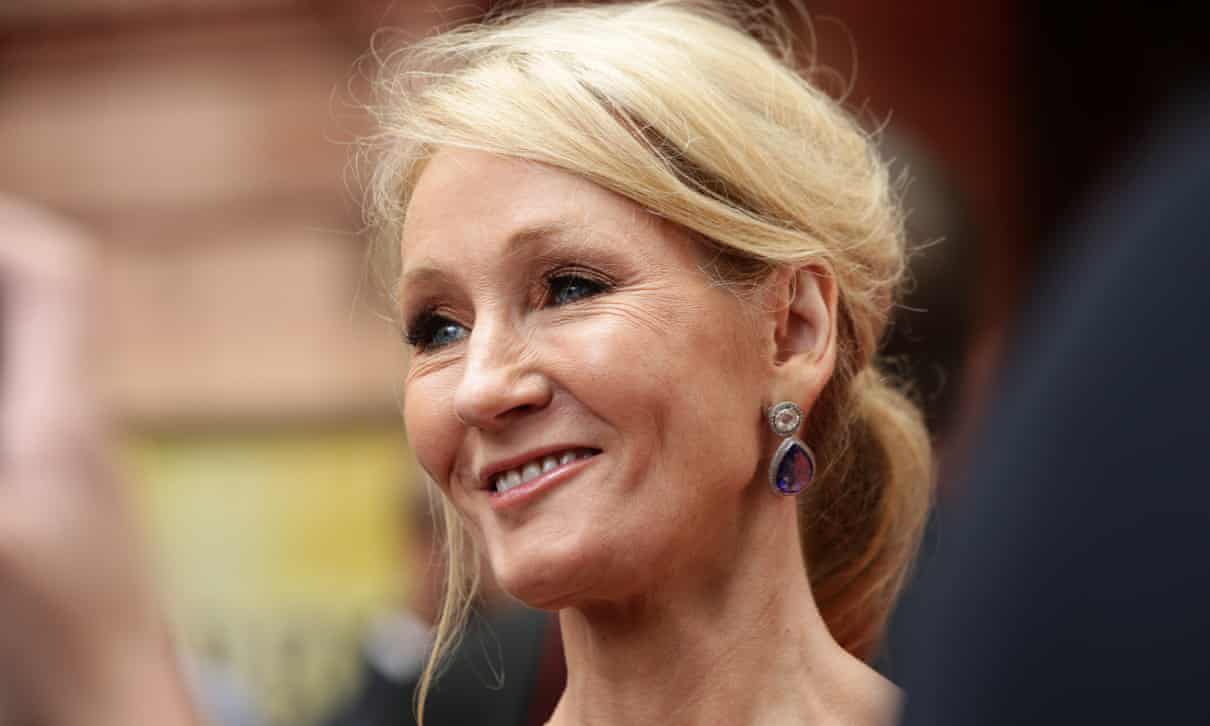
JK Rowling as is close to a sure thing in publishing as it gets. The revenue her books generate for tradpub feeds hundreds of people across the entertainment industry. But that hasn't stopped woke insurgents at Hachette, feeling their oats after getting Woody Allen's autobiography cancelled, to turn their sights on her.

Yesterday morning at publishing house Hachette, several of those involved in Miss Rowling’s new children’s book, The Ickabog, are said to have staged their own rebellion during a heated meeting. One source said: ‘Staff in the children’s department at Hachette announced they were no longer prepared to work on the book.

‘They said they were opposed to her comments and wanted to show support for the trans lobby. These staff are all very “woke”, mainly in their twenties and early thirties, and apparently it is an issue they feel very strongly about.’

It also really burns your stomach lining when someone you thought for sure was on your side turns out to not be.

Say what you want about Rowling ret-conning Albus Dumbledore into some sort of gay icon. Her comments on the transgender movement's bending of reality to conform to its vision were the sanest thing I've heard her say in years.

Hachette issued a statement that, while hypocritical, is nonetheless refreshing in today's political climate:

Freedom of speech is the cornerstone of publishing. We fundamentally believe that everyone has the right to express their own thoughts and beliefs. That’s why we never comment on our authors’ personal views and we respect our employees’ right to hold a different view.

At least someone's saying it.

Who knows what motivated Hachette to stand up for Rowling. My guess is she's simply too important to their bottom line to let go. It's a wonder that Rowling, an institution in her own right, would put up with this nonsense. She doesn't need Hachette to sell millions of books. Her name finishes the sale.

For the insurgents at Hachette, this is an opportunity for reflection. How many, when put to it, would pass an ideological purity test? How many have never compromised with society? How many have never uttered a word of doubt about a beloved cause? Knowing how few in number such people are, they cannot maintain the fiction of their ascendancy.

Military historian Victor Davis Hanson writes:

Inevitably cultural revolutions die out when they turn cannibalistic. Once the Red Guard started killing party hacks too close to Mao, it began to wane.

Once cultural revolutions turn anarchic and eat their own, they lose support. When quiet sympathizers conclude that they too may targeted, to survive they turn on their former icons.

As always, let me know what you think in the comments. If you like hard sci-fi, check out my books Seeds of Calamity and Tendrils to the Moon. You can find extended previews for each here and here.

IndieGen.xyz

Publishing power was decentralizing and democratizing before the current pandemic turned the world upside-down, with ViacomCBS announcing they were selling Simon & Schuster in March. In the last 2 months, the trend has only sped up, with Barnes & Noble to be the next major domino to fall.

As tradpub's slow demise sinks the book market into chaos, readers will miss the content curation legions of laid-off agents, editors, and publicists used to provide. People read what's put before them, and what's put before them is put there by a distribution and marketing network that will soon go extinct.

Long story short, we are all independents now.


Amazon could have filled readers' need for content curation, but they've dropped the ball. Into the void steps IndieGen.xyz, a "virtual convention" for indie creators. It's the brainchild of Paula Richey, who writes:

We can’t rely on big platforms to give our indie creators a level playing field. They’re all too invested in engineering the outcomes they want. Here, your work rises or falls on its own merit. How well will you serve your customers?

I’ve had my suspicions confirmed that a certain giant retail platform is turning into a pay-to-play marketplace. Just like I’ve said, sponsored ads are taking up all the best space, and the regular spaces for all the little people have been nerfed to make those ads more necessary.

IndieGen.xyz is a straightforward, customer-centered search, not a complex algorithm that hides some things and recommends others. This is why it doesn’t host the actual sales pages or handle the payments. It doesn’t take up a lot of space. It doesn’t need to sort the shoppers. All they have to do is browse the site and find what they want. I hope some of them want what I have to offer at OtherRealm Studio, and will eventually buy some IndieGen.xyz merch as well once I get that done, but I’m not about to cheat to make it happen. I create what I create and people want what they want; it doesn’t need to be complicated.

Richey is doing a public service with this site, and I'm proud to support it. This is where the rubber meets the road. Browse the booths, or if you've got something to sell, apply for one yourself. The process is easy and quick.

As always, let me know what you think in the comments. If you like hard sci-fi, check out my books Seeds of Calamity and Tendrils to the Moon. You can find extended previews for each here and here.

How does B&N survive?

The last time I bought a book at Barnes & Noble was 2012. I paid $16.99 and immediately regretted it. I could have gotten the same book on Amazon for $10.99, and qualified for free shipping if I threw in some other items. I didn't read the book until 3 years later, so it's not like I was chomping at the bit to start it right away. Lesson learned.

Barnes & Noble stores are too big and too spread out. They're impersonal and pretentious. There are too many titles in too many categories, yet not enough titles in the category that I'm shopping for. And they're expensive.

If you like browsing for books, it's a fine place to go and see what's available. But if you're looking for something specific, something that isn't/wasn't a bestseller, forget it. Sure, each Barnes & Noble store has a ton of inventory, but it's only a fraction of what's out there. The competition, Amazon, has a vastly superior inventory thanks to third-party sellers. Price- and selection-wise, you can't beat Amazon.

It seems to me there are two retail market models for physical books. One is to sell oodles of the Big 5's darlings. This is what Costco and Wal-Mart do. You can capture half of the 690 million physical book sales in America per year with fewer than a thousand titles. You don't need a big store for this to work. The other retail market model is to sell everything, which is what Amazon and its third-party sellers do. Barnes & Noble is flailing about in no man's land.

I was stunned to learn Barnes & Noble is responsible for a fifth of online book sales. I thought it would be lower. What's holding them back is ebooks. Nothing against the Nook, but I just couldn't get behind it. Barnes & Noble and the Nook is an unnatural marriage. Reading differences aside, the physical and digital marketplaces are completely different consumer experiences. Since Amazon's marketplace is digital, I'm more comfortable buying an ebook from them.

They chose the platform name Nook because it calls to mind a cozy corner. Plus it rhymes with book! Walk into a Barnes & Noble, though, and there's nothing cozy about it. The Kindle is better branded and arrived 2 years ahead of the Nook. Despite getting a late start, Barnes & Noble could have marketed themselves as the go-to ebook platform for self-published authors, but they missed the boat. When I offer my ebooks for sale on the Barnes & Noble website, it takes them months to approve it. Amazon takes a day or two.

It's a post-coronavirus world now. For the time being, Barnes & Noble is exclusively an online operation, where they lag behind Amazon in physical book sales and ebook sales. And they have a massive overhead, with 600 retail locations sitting empty. Hello Sears and Toys 'R' Us.

The future looked grim for Barnes & Noble even before the coronavirus. Their revenue has fallen over 10% in the last 4 years, and they were recently acquired by a hedge fund. The new CEO James Daunt is famous for opening profitable book stores in Britain. But what about turning around flagging stores that struggle to fill bloated retail space?

A dramatic restructuring of the market is overdue. Readers want books fast and cheap, and they put a premium on personal interaction. The conditions are ripe for an indie renaissance. If you want to join me on this journey, sign up for my mailing list. As a thank you for signing up, you'll get a free digital copy of my space colonization book, Tendrils to the Moon . I have also made available the first 4 chapters of my space adventure book, Seeds of Calamity, for free. If it piques your interest, get yourself a copy at Amazon.

As always, let me know what you think in the comments. I'll reply to you as soon as I can.

Sources:

The war on book borrowing

Well, that didn't last long.

Only a week after Macmillan called off their ebook license embargo, tradpub opened a new front in the war on book borrowing: the Internet Archive.

The Internet Archive, which hosts public domain books and loans licensed ebooks like a library, suspended borrowing limits during the coronavirus epidemic. This brought the ire of the Authors Guild and the Association of American Publishers, whose dues-paying members lose royalties but gain new readers from every book they don't sell.

They justify their actions better than I can:

On March 17, the American Library Association Executive Board took the extraordinary step to recommend that the nation’s libraries close in response to the COVID-19 outbreak. In doing so, for the first time in history, the entirety of the nation’s print collection housed in libraries is now unavailable, locked away indefinitely behind closed doors.

This is a tremendous and historic outage. According to IMLS FY17 Public Libraries survey (the last fiscal year for which data is publicly available), in FY17 there were more than 716 million physical books in US public libraries.  Using the same data, which shows a 2-3% decline in collection holdings per year, we can estimate that public libraries have approximately 650 million books on their shelves in 2020. Right now, today, there are 650 million books that tax-paying citizens have paid to access that are sitting on shelves in closed libraries, inaccessible to them. And that’s just in public libraries.

And so, to meet this unprecedented need at a scale never before seen, we suspended waitlists on our lending collection. As we anticipated, critics including the Authors Guild and the Association of American Publishers have released statements (here and here) condemning the National Emergency Library and the Internet Archive. Both statements contain falsehoods that are being spread widely online. To counter the misinformation, we are addressing the most egregious points here and have also updated our FAQs.

One of the statements suggests you’ve acquired your books illegally. Is that true?
No. The books in the National Emergency Library have been acquired through purchase or donation, just like a traditional library. The Internet Archive preserves and digitizes the books it owns and makes those scans available for users to borrow online, normally one at a time. That borrowing threshold has been suspended through June 30, 2020, or the end of the US national emergency.

Interestingly, you could flip the argument back on these writers. Libraries bought their overpriced hardcovers, which are sitting on shelves not being read due to bans on public gatherings. Libraries aren't asking for refunds, so why are they quibbling over ebook licenses?

I hope they keep this up because libraries represent a huge growth market for indie authors. By all means, Chuck Wendig et al., if you think libraries are violating licensing agreements by suspending borrowing limits for 3 months, take back your licenses and make your embargo universal and permanent.

Know who doesn't live on razor-thin margins? Independent authors and small presses. That's because ebook supply chain costs are basically zero, which puts traditional publishing with its leviathan infrastructure at a big disadvantage. You commonly see Big 5 books sell on Kindle for $10. The price point for indie authors is $5 and often less.

Both my books are available for a buck apiece. For hard sci-fi fans, Tendrils to the Moon tells the story of the first commercial expedition to colonize the Moon. Seeds of Calamity, my second book, is an action-adventure story set in space, featuring zero-gee acrobatics, evil corporations, and alien parasites.

As always, leave a comment below. I'll respond to you as soon as I can.

Tradpub vs libraries part 3

For context, here are parts 1 and 2.

Last week, Macmillan blinked:

“There are times in life when differences should be put aside,” Macmillan CEO John Sargent wrote in a memo to librarians obtained by Publishers Weekly. “Effective on Friday (or whenever thereafter our wholesalers can effect the change), Macmillan will return to the library e-book pricing model that was in effect on Oct. 31, 2019. In addition, we will be lowering some ebook prices on a short term basis to help expand libraries collections in these difficult times.”

It was a futile and pointless fight to begin with. I think Macmillan knew this and they were waiting for something they could blame for backing down. The coronavirus epidemic allows them to save face.

Since theaters are closed and millions of people are furloughed from work, people are looking for cheap entertainment to fill their free time. This is a big moment for ebooks, whose supply chain capacity is limitless in good times and bad. Libraries and digital vendors are well-positioned to fill that void.

Consider this. Macmillan is headquartered in downtown New York, so their doors are shuttered. The overhead required to run a company of that size is in millions of dollars per day, on top of printing costs and paying author contracts. For the time being, it's good sense for Macmillan to go into hibernation and subsist on existing ebook sales and licenses. I guarantee their new releases on tap for the next month are a drop in the bucket compared to their current catalog, both in sheer numbers and in quality.

When money's tight, few people want to pay double or triple the average ebook price for a new release. Quality is too variable to sink that much into a single book. Both my books are available for just a dollar. For the sci-fi nerd, Tendrils to the Moon tells the story of the first commercial expedition to colonize the Moon. I tried to make it as scientifically realistic as possible. Seeds of Calamity, my second book, is an action-adventure story set in space, with a wild detour to Mars.

As always, leave a comment below. I'll respond to you as soon as I can.

Tradpub vs libraries part 2

Macmillan's embargo on ebook library lending should serve as a warning to everyone, libraries included, that tradpub is entering its terminal stage. Only companies backed into a corner commit such bizarre acts of seeming pettiness and irrationality. The news today that the newly merged ViacomCBS is putting Simon & Schuster up for sale is another data point trending downward for tradpub.

As the LA Times notes, the likeliest buyer of S&S is another one of the Big 5 publishers, which would mean a further concentration of clout in the (albeit shrinking) publishing industry. This raises the risk that Macmillan's ebook dispute with libraries could grow in scope and affect a larger share of new published books than it does now.

It helps to look at this dispute in terms of a labor strike. Macmillan controls the books, or the labor force, and libraries control product distribution. Publishers can hold back their "labor" to negotiate better ebook licensing terms with libraries. Libraries, under pressure from customers--or their members--would be forced to negotiate or lose their members.

Most big publishers rely on a handful of writers and highly publicized releases each year to turn a profit. Some writers, household names like James Patterson or Stephen King, have as much, if not more, power as the imprints that publish them. One of them could opportunistically cross the picket line and negotiate ebook licensing on his own.

Or something else could happen. Libraries could read the tea leaves foretelling tradpub's doom and change their acquisition model. There are independent publishers and self-published writers who are dying to be read. They would love love love to sell ebook licenses to libraries. The conversion rate of freeloaders to paying customers is high owing to the higher premium readers put on their time, as opposed to their money.

The good news is most libraries are set up to directly serve their communities. They're naturally inclined to feature local authors and local presses. If they've been on the fence about pivoting to the indie book scene, this Macmillan embargo might be all the convincing they need.

It doesn't hurt to try. Macmillan's gambit presents an opportunity too good to pass up for agile, independent writers and publishers with high growth ceilings. Seize it.

Here's the American Library Association's FAQ on the embargo.

Speaking for myself, I give my book to anyone who asked if I knew they were going to read it. I do, in fact, give my debut book Tendrils to the Moon to anyone who signs up for my mailing list. You can sign up for the mailing list on the right side of the blog page. Or, if you're viewing this on the mobile site, click here.

Also, you can read the first 4 chapters of my newest book, Seeds of Calamity, for free. If it piques your interest, get yourself a copy at Amazon. I appreciate the support!

Literary racketeering

As a follow-on to my post about the furor over American Dirt, there is something creepy about the sins tradpub imagines itself to have committed, and the self-effacing ways it elects to be cleansed of guilt. Read this, courtesy of Publishers Weekly:

"Roberto, David, and I came to New York on a restorative and reparative mission," Gurba said in her statement at the press conference. "We came not only to extend an olive branch to Flatiron. We came to offer our assistance in restoring the dignity of all parties harmed. We offered Flatiron a chance to wipe away the dirt."

In a statement sent to PW Wednesday evening, Gurba added: "Overall, the meeting went well. You could smell the discomfort of some folks in the room and that was important: meaningful change is typically accompanied by 'growing pains' and B.O. I was also able to express to [Macmillan executives] that while this experience has undoubtedly been difficult for them, having my life repeatedly threatened for engaging in literary criticism has not been fun."

This goes well beyond a shakedown. Gurba describes the meeting in messianic language. She arrived on a "mission" to ritually "wipe away the dirt." But not before she laid into them, condemning them for their supposed crimes. In one hand she held their guilt, which she offered freely. In the other she held absolution, which came at a cost.

(Note how Gurba justifies the executives' pain by citing the threats she has received, as if the executives are somehow responsible for the blowback against her race-based critiques. When your life is repeatedly threatened, I suspect you're doing more than just writing book reviews.)

The cost of absolution won't be limited to the reparations Macmillan promised the apostles of #DignidadLiteraria. Ostensibly every publisher's task is to sell books. That mission is now subverted by the new task of enforcing racial quotas in their workforce and book content. As a result, Macmillan's market share will decline. Remember, if what Gurba et al. are asking for sold books, Macmillan would have beeing doing it already.

Here's another publisher who kow-towed to a racially motivated mob:

Last season, we published a memoir by a white author writing about falling in love with China, and a Chinese man. The cover featured the author wearing a qipao. Despite all I’d experienced, I didn’t see the cultural appropriation. I thought she had a “pass” because she was married to a Chinese man, because this was her lived experience. But book influencers on Instagram squarely took us to task. We read their posts, listened to their objections, and changed the cover. The dialogue with our critics was not comfortable, but the outcome was satisfactory—for us and for them.

One side lobbing accusations at another isn't "dialogue." In the social media age, it's racketeering. Dialogue is something that happens between equals, not between those who wield the power to libel and their prospective victims.

The cover depicted the content of the book, a woman assimilating to her new country, and was entirely appropriate. The only satisfactory outcome in this case was for the mob to stick their objections where the sun don't shine, and for the publisher to leverage their outrage into free marketing.

Perhaps you think I'm being too crass about this. Let me know in the comments below. I'll respond as soon as I can.

My latest book, Seeds of Calamity, is now available at Barnes & Noble. You're welcome to read the first 4 chapters for free; if they pique your interest, get yourself a copy. I appreciate the support!

For a free digital copy of my debut book, Tendrils to the Moon, sign up for the mailing list on the right side of the blog page. Or, if you're viewing this on the mobile site, click here.

On the American Dirt frenzy

So Jeanine Cummins wrote a book called American Dirt about a Mexican woman and her son fleeing a drug cartel and making a run at the U.S. border, and literary critics of a certain bent are panning it—not because it's bad, although it might be—but because Cummins appropriated a culture that doesn't "belong" to her.

Appropriation is when you speak from another person's POV or temporarily adopt their traits as your own. In short, it's what writers do. You create a character; you build the setting around them; you give them traits, some of them personal, others cultural; and you drop them in a conflict that allows them to overcome and grow. It's a benign practice, and it's been done for hundreds if not thousands of years. It's especially common in fantasy, sci-fi, and historical fiction. Whether you're writing for an elf, a Klingon, or a Roman soldier, you're trying to show the reader something he hasn't seen, hopefully something magical.

The key word here is "try." Sometimes it's done well, like in a book I'm reading now, a Japanese historical fantasy by David V. Stewart called Muramasa. Sometimes it's not done well, like in a technothriller called Arctic Rising. The former succeeded because the Japanese characters fit the setting and the story DVS wanted to tell. The latter failed because the author, Tobias Buckell, was clearly using his Nigerian lesbian hero to check diversity boxes and further his sociopolitical agenda.

I don't know and don't really care if Cummins succeeded in portraying an authentic Mexican woman. What bothers me is other people telling her she can't because she's white. Mexican immigrant culture isn't "hers," so she should leave the story for someone else to tell. It's amazing this cretinous tripe still gets peddled in 2020 America after decades of mainstreaming racial egalitarianism through every cultural institution. If a Latino had written this book, seriously, what publisher wouldn't want to publish it?

Esmeralda Bermudez is at the forefront of the backlash. Check our her Twitter feed. She's particularly aggrieved there's not enough diversity in publishing. (Maybe the problem is there's not enough diversity among readers.) Conveniently you never hear what percentage of representation diversity activists want. Setting a hard quota would preface an eventual end to the grievance, thus an end to the movement. But the movement mustn't end. It's not about diversity. It's about leveraging racial grievance to exercise an insatiable will to power.

Book publicists put on a full-court press for American Dirt: securing Oprah's endorsement, printing blurbs from Stephen King and John Grisham, etc. I went to Costco last Friday and there must have been a hundred hardbacks for sale. Now, the publisher has canceled the rest of the book tour and replaced it with a shorter series of Maoist struggle sessions where Cummins will have to engage with critics telling her she can't write what she wants because of her skin color. There's a word for that: racism.

With that out of the way, I think Cummins is partly to blame for this. Whatever catharsis of racial attention she hoped to achieve with the subject matter will not come up pass. In fact, she's made it worse. Her appeasing attitude and willing acknowledgement of her "privilege" is all grifters need to delegitimize her success. As soon as you admit you profited unfairly from a supposedly racist system, you have no defense against that success being taken from you.

Courting this ugliness won't save tradpub. It will accelerate its ruin. Meanwhile, independent creators are putting out great books. They have one aim above all: entertainment.

You can judge for yourself whether I've done that in my own writing by taking a look at the first 4 chapters of Seeds of Calamity. If it piques your interest, get yourself a copy at Amazon. I appreciate the support!

For a free digital copy of my debut book, Tendrils to the Moon, sign up for the mailing list on the right side of the blog page. Or, if you're viewing this on the mobile site, click here.

And as always, let me know what you think in the comments. I'll reply as soon as I can.

Judging a book by its cover

When you read a book, you make an economic decision about how to spend your time and money. Life is too short to waste on a book that may disappoint, so before the decision to read and/or buy, a book goes through your filter, which is informed by taste, experience, word of mouth, etc.

The cover is part of this evaluation. The cover conveys information about the book's genre, style, characters, and story. If the cover looks unprofessional, or if the copy on the back doesn't grab you, it's wise and necessary to give the book a pass and look for something more appealing to you.

This isn't "judging a book by its cover," as the oft-misused aphorism goes; that implies a book sucks because the cover sucks. You've simply chosen not to read it, just like you choose what movies to see, or what to eat, or what to wear, or who to ask out on a date. Discernment is an elemental part of life. If you don't filter books this way, you'll find yourself reading a lot of books you don't like.

Only someone who's read a book can judge it. That's why it's important to have an appealing cover, to get through readers' filters so they can be in a position to judge it, good or ill.

As always, let me know what you think in the comments. I'll reply as soon as I can.


I designed the cover art of Seeds of Calamity in Inkscape. Does it pass your filter? If so, I invite you to read the first 4 chapters or get yourself a copy at Amazon.

For a free digital copy of my debut book, Tendrils to the Moon, sign up for the mailing list on the right side of the blog page. Or, if you're viewing the mobile site, click here.

Tradpub vs libraries

I have thoughts about this:

As of November 1, 2019, Macmillan Publishers only allows libraries—no matter the size of their city or town—to purchase only one copy of each new eBook title for the first eight weeks after a book’s release. This change in policy greatly reduces accessibility of library materials to you, our customers.  

San Antonio Public Library (SAPL) and Ramiro S. Salazar, our Library Director, who is also the Public Library Association President have joined American Library Association (ALA) and Urban Libraries Council (ULC) as well as libraries across the nation in a fight to reverse the decision of Macmillan Publishers. Unfortunately, even with strong opposition, support from city and county leaders across the nation and more than 186,000 petition signatures, Macmillan has implemented its new policy.  

As a result of this change in policy, SAPL has joined other major library systems in a business decision to suspend the purchase of Macmillan Publishers titles until the restrictive policy is either reversed or Macmillan comes to the table to discuss options that will continue equitable access to eBooks for our customers. As demand for digital content grows, we cannot idly accept Macmillan’s new eBook policy. Offering only one new eBook in San Antonio, for a library serving almost 2 million people at 30 locations, will deny timely access, extend your wait times and discourage readership.  

Macmillan titles represent approximately 7 percent of the San Antonio Public Library’s eBook collection. While this is a fraction of SAPL’s digital eBook collection, we continue to be concerned about additional publishing companies following suit with similar policies which will become an even greater issue for eBooks in the SAPL collection. We will continue to purchase print copies of Macmillan titles as this policy does not affect that format.

Traditional publishing is dying, and it's not because of libraries. It's because the whole vertically integrated publishing market is a 20th century relic, and the ossified structure can't adapt to market changes or shrink proportionally in response to a long-term decline in profits.

What are those market changes? They are:

  • Low-cost ebooks Amazon's rise to dominance
  • A rival resale submarket
  • Independent publishers and self-published authors

If you can buy 20 to 30 books (ranging in quality from bad to great) on Kindle for the same price as one brand new hardcover book (which is not guaranteed to be any good), the former makes more sense from a consumer's perspective.

Beyond the publishing world, there's competition from TV, movies, video games, and other digital forms of entertainment. You've heard this before, but attention spans are getting shorter as our daily lives become more integrated with technology. And I think people value their time more than they value their money. They'd rather drop $10 to see a 2-hour movie than drop any amount of money to spend 12 hours reading a book.

So from where I sit, this targeting of libraries by Macmillan misses the mark. It's ill-considered at best, petty at worst.

On the other hand, I think Macmillan's new policy is too lenient. If readers are so excited about reading a new book that they can't bear waiting, they can shell out the hardcover price to read it on its release date. To read a book for free, waiting 8 weeks is a small price to pay. Heck, I would say waiting a year is still worth it. It's not like there are no good books lying around to read in the meantime ([cough] Seeds of Calamity [cough]).

If I were in charge of Macmillan, I wouldn't let any version of my books find their way into libraries until the initial print run is over and the paperback versions are hitting the shelves. This would maximize my hardcover sales, since hardcovers have the highest profit margin.

As always, let me know what you think in the comments. I'll reply to you as soon as I can. I invite you to read the first 4 chapters of my new sci-fi book, Seeds of Calamity, for free. If it piques your interest, get yourself a copy at Amazon. I appreciate the support!

Backtracking

I'm finishing up chapter 7 of Seeds of Calamity, and I can't understate how pleased I am with how the plot and characters are shaping up. The prose and plotting feel to me so much tighter than they were in Tendrils to the Moon; that was something I wanted to improve on after overshooting the Tendrils's wordcount by a whopping 40 percent.

I want to talk about backtracking--namely, changing your mind about the plot and the direction you want to go in after you've already committed to a different course. I did this recently. I had to retool 9,000 words I had written for chapters 6 and 7 because I was no longer convinced a key plot device was realistic or helping the plot advance the way I wanted it to. I say "retool" because I hit upon a solution that allowed me to keep most of what I wrote instead of trashing all that hard work.

I won't give away the abandoned plot device or what I replaced it with, but I'll say this about it: The moment I conjured up this plot device, I fancied it. It added another layer of complexity to the plot, and I savored the challenge of pulling it off. But after trying it out, I had to admit to myself it was making the book harder to write. I'm already juggling half a dozen characters' personalities, ambitions, and hurdles; why complicate things further? Like expert shot maker Phil Mickelson, I wanted to hit a 200-yard screamer off the pine straw instead of a 150-yard approach shot from the fairway. I'm glad I was able to recognize this and save the book from this dangerous tendency in time, before venturing beyond a point of no return.

I also backtracked over the opening scene of Seeds of Calamity, which I wrote around August, I think. My original opening scene, where a man wakes up from drug-induced sleep, was boring, and it missed the personality of the protagonist. I was able to salvage pieces of dialogue and exposition of secondary characters, but the opening scene is now completely different. It features an asteroid mining crew finding out a rock they had gone out of their way to survey was worthless.

Another one of my goals is for the paperback to go live the same day as the ebook. To that end, I designed the paperback art and interior well ahead of time, and I received the proof copy Wednesday. I need to make a bunch of small corrections, and my fears about the spine were confirmed. The upside is I have a long time to troubleshoot these issues so they're corrected before we go into production. (Don't take this as an indication the book is complete. I'm about half done.)

Tell me what you think in the comments below! I'll reply to you as soon as I can. Feel free to read the first three chapters of Tendrils to the Moon and see if the last 9 chapters are worth your time. The paperback version is on sale at Amazon for $8.99. The ebook is only 99 cents.

Book promotion post mortem

The full Moon promo officially ended Sunday night at midnight, and the results are in. Overall, it was a stunning success. I gave away more books than I could have hoped, and Tendrils to the Moon peaked briefly at number 3 on Amazon's bestselling hard science fiction chart.


In my post on Friday, I noted that Amazon normally takes 2-3 business days to respond to a request to price match a book. For me, they did it in about 12 hours.

The "selling" started slowly, but picked up steam Friday afternoon. The pace dropped on Saturday but was steady throughout the day, ending just shy of Friday's sales mark. Sunday showed a steep dropoff in free "purchases." The book remained free through Monday morning, when I contacted Amazon and asked them to restore the normal Kindle book price of $0.99.

During the weekend, I tweeted the book page link three times and posted to Facebook once. I don't know how effective the Facebook post was, but my tweets got few clicks. I believe most of the "sales" came from people perusing Amazon's library of free books.

As I expected, including Amazon in the promo vastly increased the giveaway's effectiveness. I won't give raw numbers, but I distributed 28 times more books than the Apollo 11 anniversary promo, which ran on Smashwords only.

If I run a promo over a weekend again, I'll end it Saturday night, owing to the diminishing returns Tendrils experienced on Sunday. My guess is that most people load up on free books at the start of the weekend, and they're done looking by Sunday. Also, if my weekends reflect the average person's, most people have less discretionary time on Sundays than they have on Saturdays, what with church and getting ready for the workweek.

I'm going to target the full Moon on Wednesday, October 24, to run my next promo, to see how effectively I can give away books in the middle of the week. Until then, Tendrils to the Moon will be $.99.

Let me know what you think in the comment section below! I'll reply to you as soon as I can.

To buy or not to buy ISBNs

Publishing Tendrils to the Moon turned out to be way harder than I thought. Soon after the ebook went life, enough people asked me for hardcopies that I decided to publish in paperback, too. Per the directions of David V. Stewart, who has several good videos on designing book covers, I used Createspace, which is basically Amazon's imprint, to design my paperback.

I was quickly faced with several questions, such as the paperback's size, price, distribution channels, etc. But the question I agonized over was whether to buy an ISBN.

To publish a paperback, you need an ISBN, whereas it's industry-standard to not require ISBNs for digital ebooks. Many paperback and ebook vendors, including Createspace, offer ISBNs for free, because in great quantities they're extremely cheap. Their cut of your sales will cover the cost of an ISBN easily.

However, a single ISBN (which was never an option for me personally) costs $125, and 10 ISBNs costs $295. I balked at this expense. Theretofore, all the work I had put in to write the book, edit it, proofread it, design the cover, and publish the ebook had been free. Buying the rights to the cover art cost only a couple of dollars. Now I was being asked to shell out $125 to publish one paperback. Why would I do that when I can use Createspace's ISBN for free?

Take a step back and look at it like this. Self-publishing is about giving the writer control of the publishing process. Having your own ISBNs enhances that control. With your own ISBNs, you can publish under your own imprint, essentially starting your own publishing company. That helps with branding. It also makes you the point of contact for sales and distribution. Most independent and chain bookstores do not carry books from the Createspace imprint. Finally, it gives the author warm and fuzzy feelings. (Don't discount the value of warm and fuzzy feelings.)

Read more about ISBNs here.

For awhile I was committed to buying a block of 10 ISBNs and starting my own imprint, Dooley Fiction. I even started designing an imprint logo. In the end, this is what my wife and I decided: Don't overcommit to a whole course of action just to publish one paperback. Use a free ISBN this one time for Tendrils to the Moon. Get your feet wet in the publishing world. Learn some more. Write another book and try to get that one traditionally published. If that doesn't work out, start our own imprint and buy our own ISBNs.

Let me know what you think in the comment section below! I'll reply to you as soon as I can. I invite you to read the first 3 chapters of Tendrils to the Moon for free, and see if the last 9 chapters are worth your time. The paperback version is on sale at Amazon for $8.99. The ebook is only 99 cents.

Tendrils to the Moon paperback interior review

The interior paperback design for Tendrils to the Moon differs significantly from the ebook format.

Before I wrapped up the first draft, I got the idea of depicting a shadow moving laterally over a curved surface, which is what a waxing Moon looks like, at the start of every chapter. I designed each little Moon in PowerPoint, then screenshot them, cropped them in Paint, and pasted them into the .doc file.


Once I converted to the ebook format, however, I realized the white background of the waxing Moon pictures looked hideous in the ebook. So I got rid of them. For the paperback, I chose a white page to print on, and I brought back the pictures. They're very simple, but they're a nice touch, I think. I like how they give the reader a sense of progress as more and more of the Moon is covered in shadow. And maybe a sense of foreboding, too, like the doomsday clock in the Watchmen graphic novel.

Because I didn't use the footer in Createspace's 5.5x8.5-inch interior template, I lowered the bottom margin a quarter-inch, saving about 20 pages. For the header, I went with Book Antiqua font size 10, alternating my name and the title on every odd and even page.

The chapter headings and the title page use the Sitka Subheading font, the same font that I used for the title on the cover and the spine. In retrospect, I think I should have put my name under the title on the title page, instead of above it.

One thing I wasn't happy about was that the link to my blog got split between two lines. It looks like there's a hyphen in the link, when there shouldn't be one. I caught this after Createspace approved the files, and I didn't want to go through another 2 days of waiting after resubmitting the files, so I accepted the mistake. Plus, I think forcing the link onto one line would have stretched out the line above it.

A setback I suffered when I uploaded the interior file to Createspace's servers was that it was shortening each page by about one line of text. In isolation this is no problem, but it rendered the table of contents incorrect. I retried uploading the interior file several times, and the problem kept occurring. I got around this by converting the .doc to a .pdf, which freezes text, and uploading that to Createspace's servers.

As always, let me know what you think in the comments. I'll reply to you as soon as I can. Also, the paperback version of Tendrils to the Moon is on sale at Amazon for $8.99. The ebook is still a mere 99 cents.